The 2026 Energy Pivot: Why C-Suite Investors are Swapping Section 30C for 48E Battery Credits
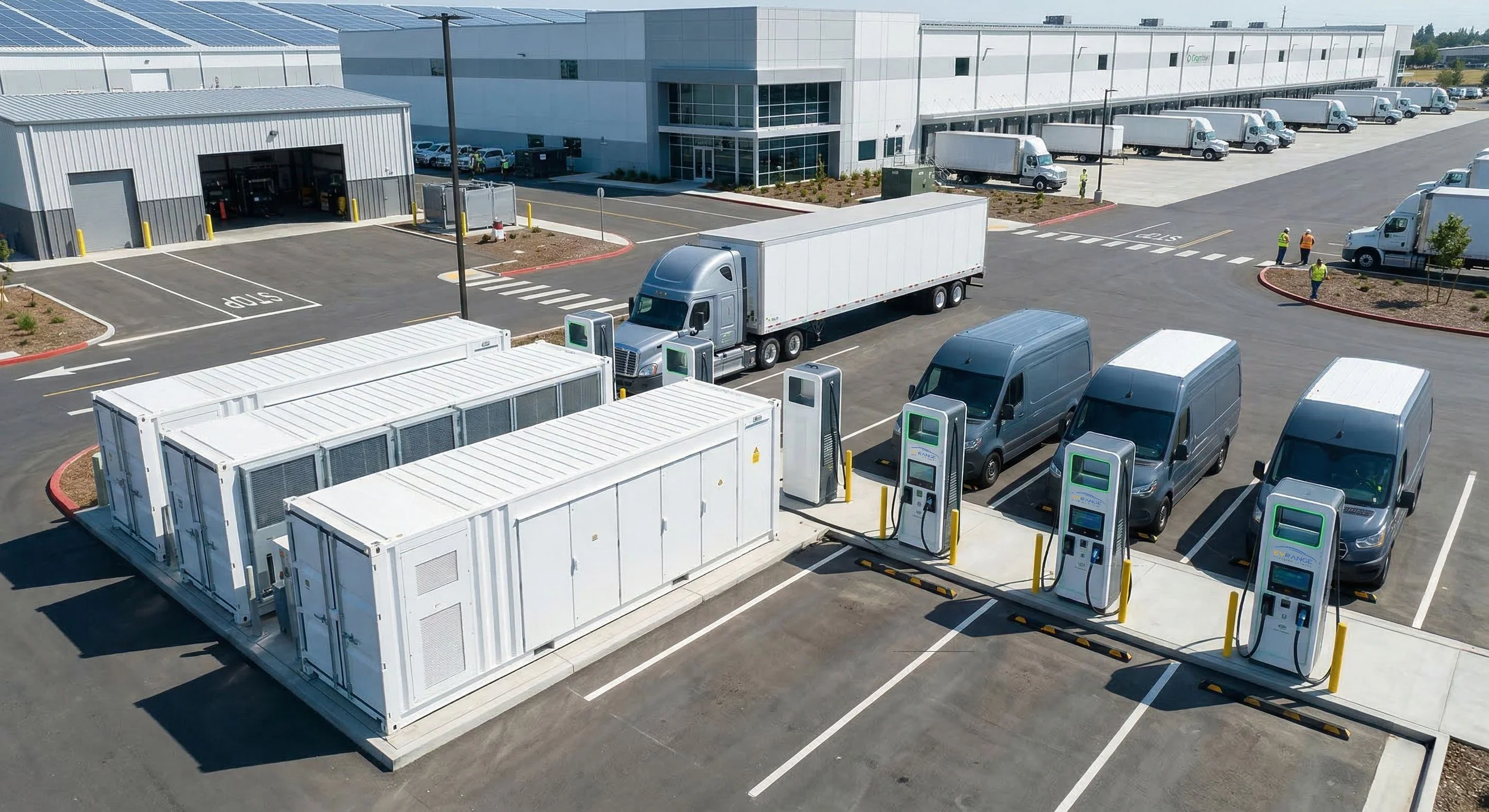
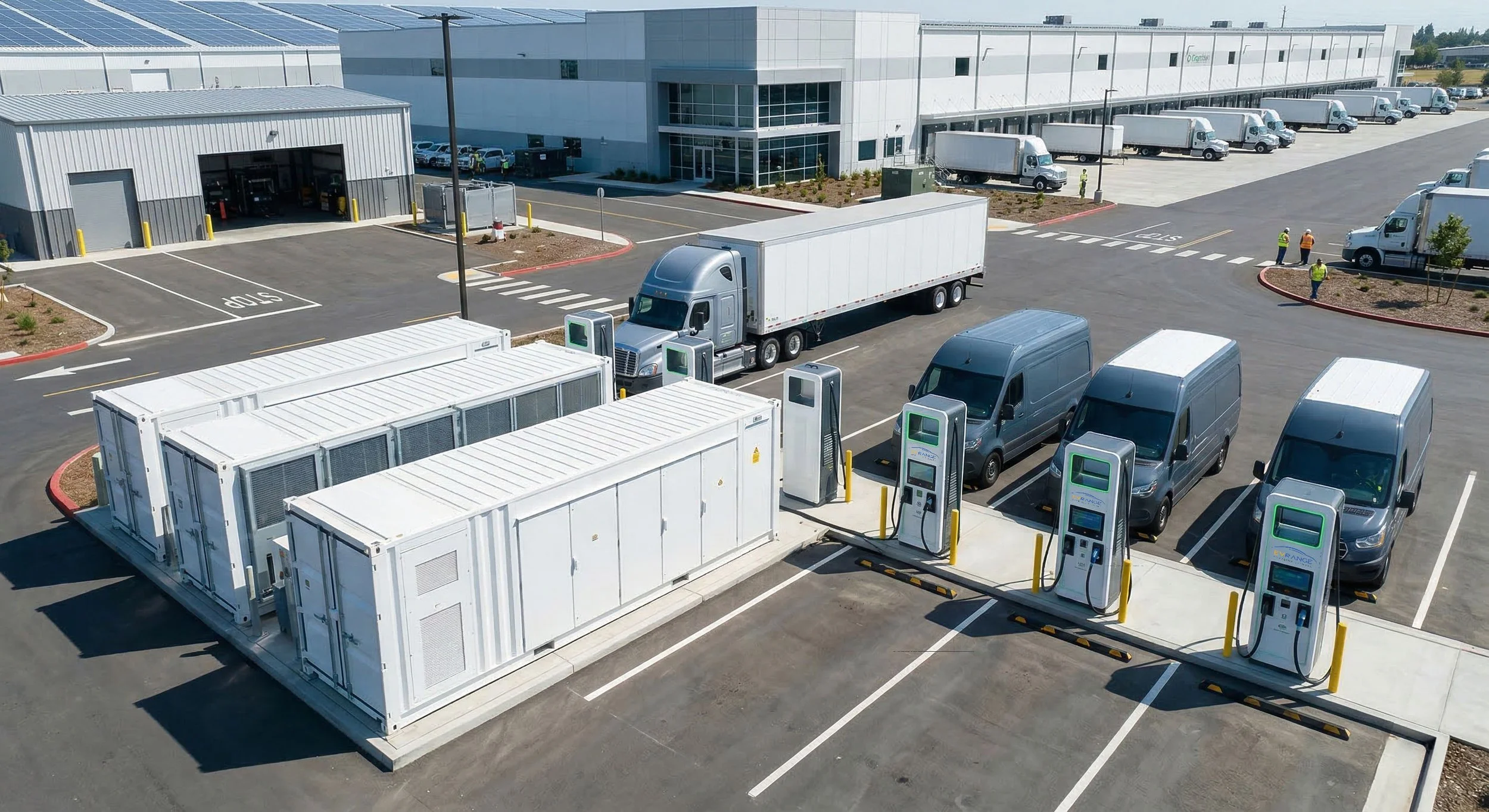
A mockup of an EV charging hub with battery energy storage systems.
For fleet operators, port authorities, and industrial facilities, the roadmap for EV infrastructure is shifting. As we approach the mid-2026 "sunset" of legacy credits, sophisticated investors are no longer looking at chargers in isolation. Instead, they are leveraging Section 48E (the Clean Electricity Investment Tax Credit) to fund large-scale battery storage, a move that offers a longer tax runway, higher credit ceilings, and critical protection against rising utility demand charges.
The Operational Case: Why Storage is No Longer Optional
Before addressing the tax credit, it is essential to understand the "hidden" costs of high-power charging. DC fast chargers create massive power spikes. Utilities bill these via demand charges, based on your highest 15-minute interval of consumption. A single peak event can inflate your monthly costs for the entire billing cycle.
Battery Energy Storage Systems (BESS) solve this by:
Peak Shaving: Drawing from stored energy during high-demand charging events to flatten the grid draw.
Grid Resilience: Ensuring uptime for mission-critical fleets (ports, transit, logistics) during outages.
Throttling Prevention: Allowing the EV Range platform to maintain higher throughput across multiple ports without hitting utility limits.
Section 48E: The New Standard for 2026
The Section 48E Clean Electricity ITC replaced the legacy Section 48 credit for projects starting in 2025. Unlike its predecessor, 48E is technology-neutral. It covers any qualifying energy storage system with a minimum capacity of 5 kWh, provided it meets specific labor and sourcing standards.
The Credit Value Stack
For commercial storage co-located with EV charging, the credit can be stacked to reach significant ROI:
Base Rate: 6% of qualifying costs.
PWA Bonus (30% Total): Available if the project meets Prevailing Wage and Apprenticeship requirements. This is the "gold standard" for commercial projects.
Domestic Content Adder (+10%): For projects meeting US-made thresholds for manufactured components.
Energy Community Adder (+10%): For projects located in "brownfield" sites or traditional energy-producing regions.
Key Strategy: A well-structured project meeting all criteria can reach 50% or higher in federal tax offsets.
30C vs. 48E: The Strategic Election
Many operators are familiar with the Section 30C credit for chargers. However, 30C and 48E are mutually exclusive for the same piece of storage equipment. You must choose one.
| Feature | Section 30C (Refueling Credit) | Section 48E (Storage ITC) |
|---|---|---|
| Expiration | June 30, 2026 | Full credit through 2033 |
| Caps | $100,000 per item | No dollar-amount cap |
| Focus | Chargers and basic storage | High-capacity BESS systems |
| Best For | Small-scale retail charging | Large-scale fleet/industrial hubs |
For projects with substantial battery investment, Section 48E frequently produces a superior financial outcome, particularly given its lack of a $100k cap and its longer eligibility window.
The 2026 FEOC Complication
This is the most critical update for 2026 planning. Projects beginning construction after December 31, 2025, must comply with Prohibited Foreign Entity (PFE) sourcing rules.
The 60% Rule: In 2026, at least 60% of the cost of battery components must come from non-prohibited sources (excluding China, Russia, North Korea, and Iran).
Supply Chain Diligence: This requirement must be addressed during the specification stage, not after procurement.
Longevity and "Direct Pay"
Unlike the looming 30C deadline, Section 48E offers a stable planning window. The full 30% bonus rate remains available through 2033, before tapering to 22.5% in 2034.
Furthermore, Elective Pay (Direct Pay) allows tax-exempt entities, such as port authorities, municipal utilities, and transit agencies, to receive the credit as a cash payment from the IRS. This effectively turns a tax incentive into a direct federal grant for public infrastructure.
The Path Forward
Battery storage is a legitimate operational asset, not just a line item to optimize tax outcomes. However, the decisions involved—from credit election to FEOC sourcing compliance—require coordination between engineering and tax strategy.
EV Range and Cleantek provide that bridge. We ensure your high-power charging hub is not only operationally resilient but financially optimized for the 2026 regulatory landscape.
Contact EV Range to model your 2026 storage ROI
Resources & Authorities
Disclaimer: This post is for informational purposes only and does not constitute tax or legal advice. Consult a qualified tax professional regarding your specific project eligibility.

EV Range is currently offering a limited portfolio of shovel-ready, 30C-eligible sites available for immediate deployment. For investors and commercial operators, the primary barrier to maximizing infrastructure ROI is the time required to identify, license, and engineer compliant locations before federal deadlines. We have removed that barrier.