
Strategic EV Infrastructure for Commercial Properties
Scalable, revenue-generating EV infrastructure for Retail, Hospitality, and Transit Corridors. We deliver high-uptime hardware that respects your site's aesthetics.
The impact of EV Charging at Your Property
Integrating electric vehicle infrastructure is no longer just a sustainability initiative; it is a strategic asset class that drives specific business outcomes for commercial properties.
Dwell Time Economics: Charging sessions create a "captive audience." Fast charging (20–40 minutes) aligns with retail browsing, while Level 2 charging (4+ hours) supports hospitality and workplace models.
Tenant Retention & Attraction: For mixed-use and retail developments, EV capability is a primary filter for high-value commercial tenants and affluent visitors.
Asset Valuation: Modernizing a property with networked infrastructure increases its operational capability and future resale value, positioning it as a Class A asset.
Hardware Selection
Level 2 vs. DC Fast Charging
Level 2 (AC): Best for Long Dwell Times (4–8 Hours).
Use Case: Hotels, Workplaces, Multi-family.
Benefit: Lower equipment cost, lower power demand, ideal for overnight or workday charging.
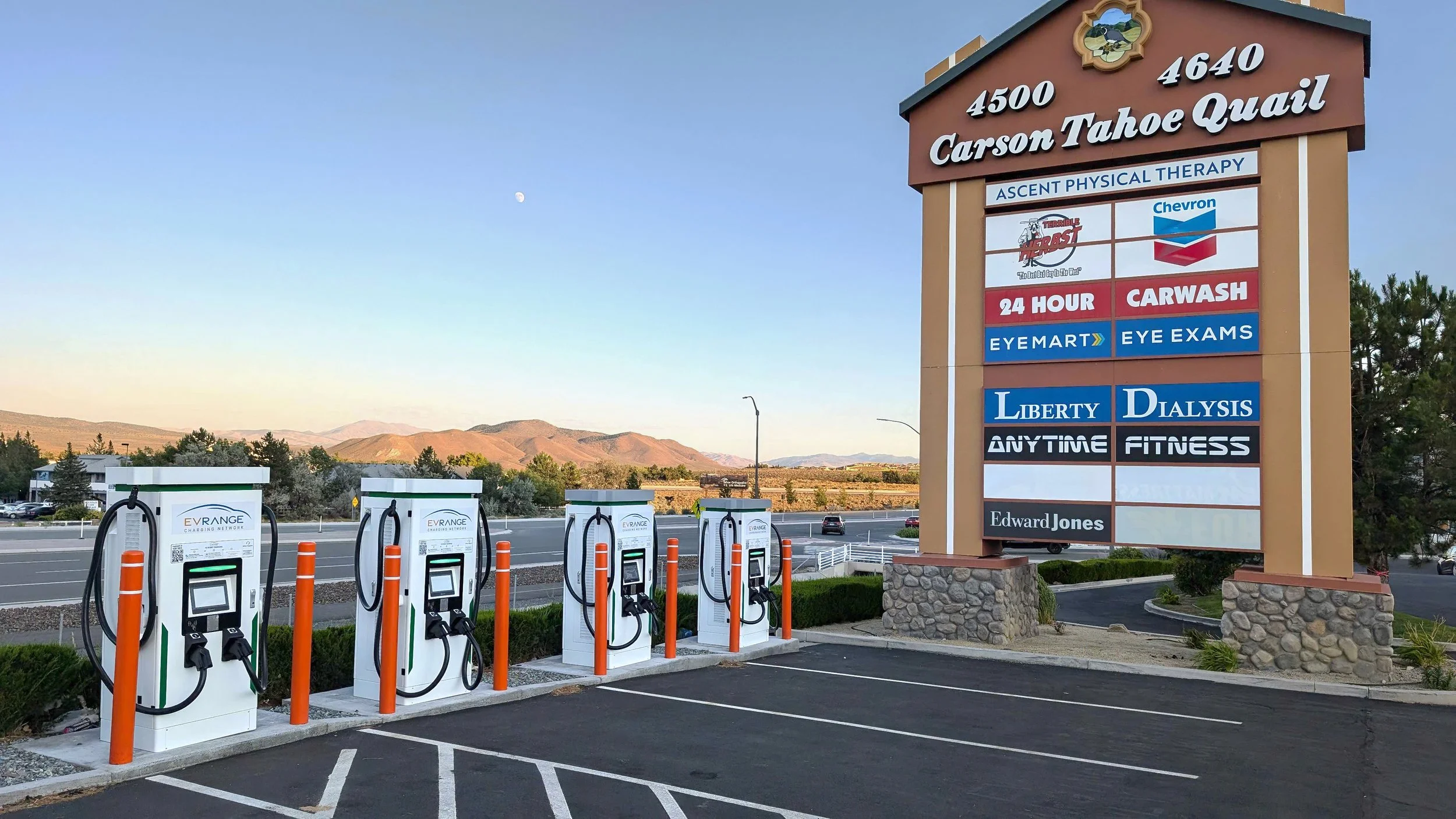
DC Fast Charging (DCFC): Best for Short Dwell Times (15–45 Minutes).
Use Case: Retail Plazas, Highway Corridors, Gas Stations.
Benefit: Rapid energy delivery that attracts transient traffic and drives immediate foot traffic.
All-in-One vs. Split System Architecture
When deploying DC Fast Charging, the physical footprint matters as much as the power output.
All-in-One (AiO): Efficiency & Footprint.
The power cabinet and dispenser are integrated into a single unit. This is our most frequently installed solution as it minimizes civil construction costs (less trenching) and fits easily into existing parking layouts.
Split System: Ultra-Power & Aesthetics.
The power cabinet is separated from the user dispenser. This is required for ultra-high power (400kW+) applications or sites where bulky equipment must be hidden away from the customer interface to preserve sightlines.
The “Permit-to-Power” Method
Commercial infrastructure is a complex construction project requiring strict adherence to municipal and utility standards. EV Range manages this lifecycle in-house to ensure compliance and speed.
Step 1: Feasibility & Power Analysis: We conduct a load study of your existing electrical service to determine if the site can support the desired infrastructure without costly transformer upgrades.
Step 2: Engineering & Utility Interconnection: Our engineers design the site layout and manage the "New Service Request" with your utility provider, navigating the complex queue for grid connection.
Step 3: Permitting & Entitlements: We handle all municipal zoning approvals, ADA accessibility designs, and building permits to ensure the site is legally compliant.
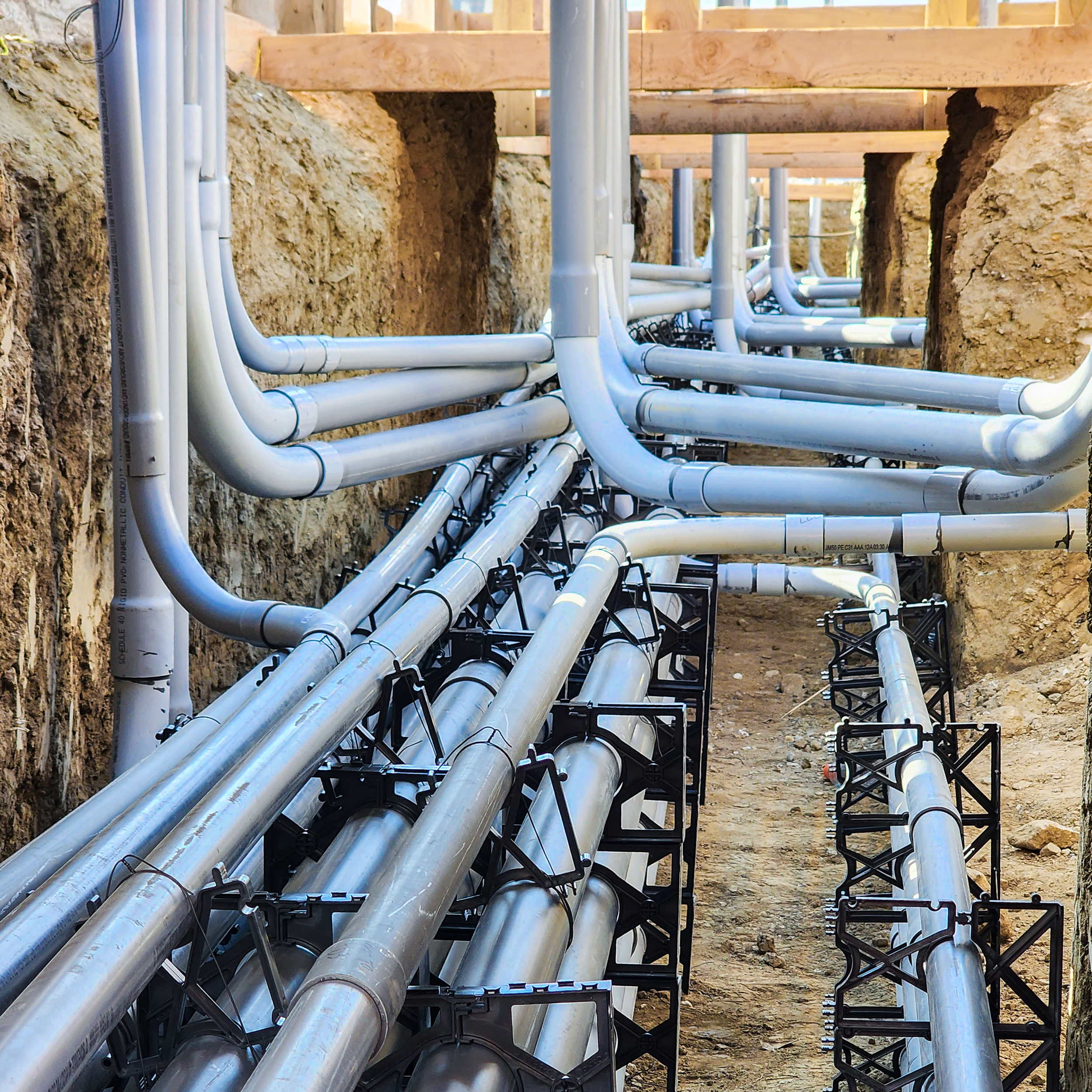
Step 4: Construction & Commissioning: Our certified teams manage trenching, concrete pads, and electrical termination. Once powered, we perform rigorous safety testing and network integration.
Navigating Grants and Capital Planning
The cost of infrastructure can often be offset by federal, state, and utility incentives—if you know where to look.
NEVI (National Electric Vehicle Infrastructure): We guide properties located near Alternative Fuel Corridors on how to meet the specific uptime and power requirements to qualify for federal funding.
Utility "Make-Ready" Programs: Many utility providers will cover the cost of the electrical infrastructure (transformers, conduit, wire) leading up to the charger. We handle the application process to maximize these subsidies.
ROI Modeling: We provide transparent financial modeling, forecasting revenue based on projected utilization, energy costs, and hardware lifespan.

Operational Excellence
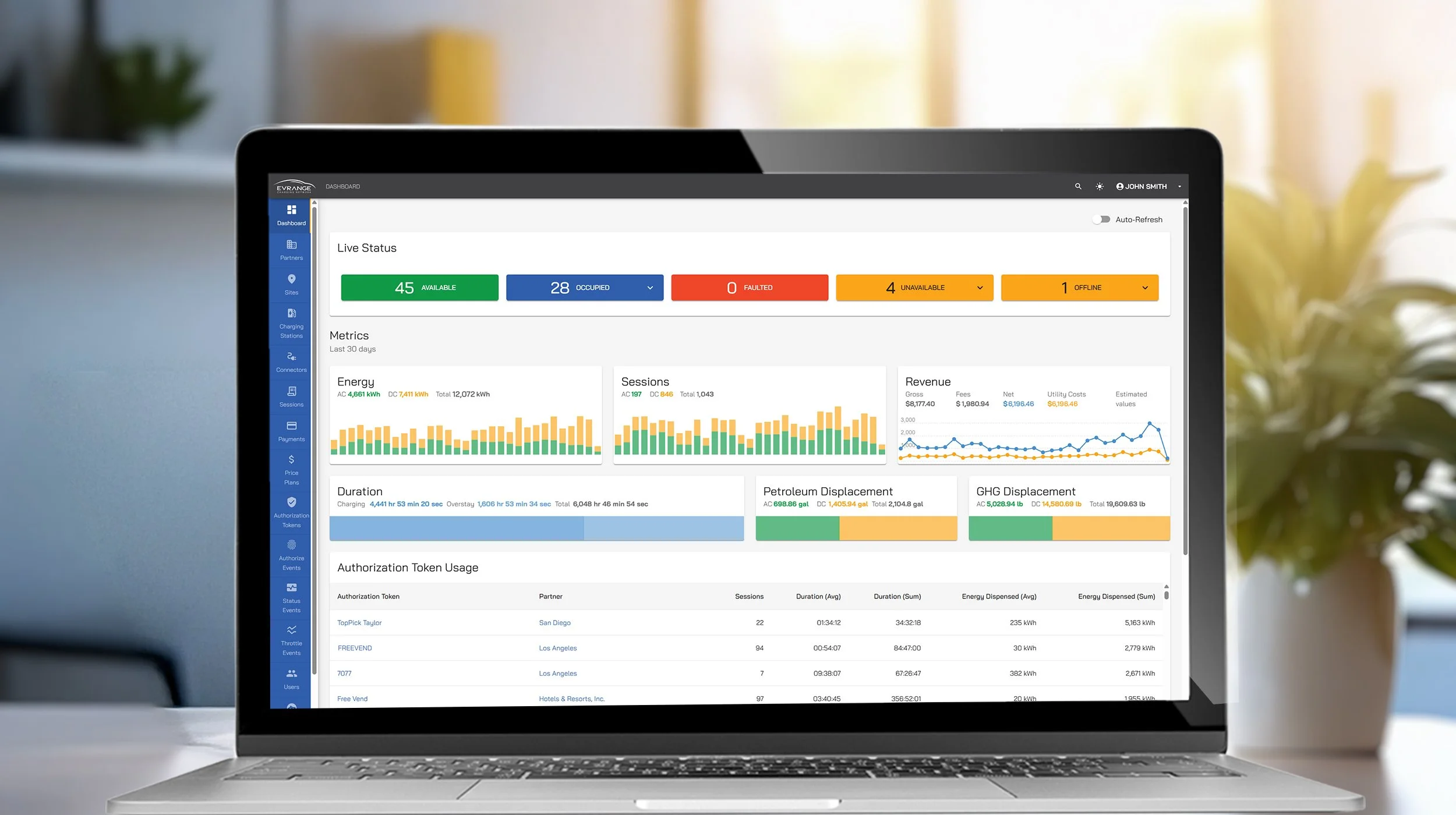
Hardware is only as good as the software that manages it. Our Charging Station Management System (CSMS) provides the control and reliability required for commercial operations.
The EV Range CSMS: A protocol-agnostic platform (OCPP 1.6) that handles billing, access control (public vs. private), and dynamic load balancing to prevent demand charges.
24/7 Network Operations Center (NOC): We provide round-the-clock monitoring. Our systems utilize self-healing diagnostics to resolve 90% of charger issues remotely.
Ongoing Driver Support: We handle the customer service. If a driver has an issue at your property at 2 AM, our US-based support team is there to help them charge.
FAQ: Commercial Infrastructure Insights
Financial & Revenue Models
Q: How does the revenue model work for commercial property owners?
A: Commercial charging generates revenue through "charging sessions." As an EV Range partner, you have full control over pricing. You can bill drivers by the kilowatt-hour (kWh) or by time (per minute). EV Range manages the payment processing, deducts a small network fee, and remits the remaining profit directly to you. Many properties also see indirect revenue through increased foot traffic and higher average transaction values from EV drivers.
Q: Are there incentives available to offset installation costs?
A: Yes. There is a robust landscape of federal, state, and utility-specific incentives. These range from the federal 30C tax credit to utility "Make-Ready" programs that cover the cost of electrical infrastructure (transformers and conduit). Our team tracks these incentives actively and will identify which grants your specific site qualifies for during the feasibility phase.
Q: What is the ROI timeline for a commercial charging station?
A: ROI varies based on utilization (traffic) and electricity costs. However, typical commercial deployments see ROI through a combination of direct charging revenue, tax incentives, and indirect value (such as higher hotel occupancy or retail dwell time). We provide a detailed 5-year financial projection as part of our initial site assessment.
Technical & Operational
Q: Does my site require a utility upgrade to support DC Fast Charging?
A: It depends on your existing spare capacity. DC Fast Chargers (180kW+) draw significant power. EV Range conducts a load study during the feasibility phase. If your current service is insufficient, we manage the entire "New Service Request" process with the utility provider to bring in additional power specifically for the chargers.
Q: Who handles maintenance if a charger goes offline?
A: EV Range provides end-to-end support. Our hardware is networked, allowing our Network Operations Center (NOC) to monitor health 24/7. We resolve 90% of issues remotely via software resets. For physical repairs, we dispatch certified technicians to your site, so your facilities team never has to touch the equipment.
Q: How much space does the equipment actually take up?
A: We prioritize minimizing lost parking. Our All-in-One units require a footprint similar to a standard shipping pallet and fit at the head of a parking stall without encroaching on the driving lane. For sites with tighter constraints, our Split System allows us to place the slim dispensers in the stall while hiding the bulky power cabinets up to 200 feet away behind landscaping or walls.